Deepak Bharadwaj
Deepak Bharadwaj / Bangalore, India
Staff Software Engineer · Distributed Systems & Platform Architecture

Designing distributed systems that hold up in production.

Nine years of backend and platform engineering with founding-engineer ownership: from service boundaries and data models to Kubernetes, edge security, and on-call. Event-driven EV charging platforms, multi-tenant identity & payments, and enterprise banking connectors.

500K+ Daily Transactions Event-driven EV charging platform
99.9% Availability Multi-tenant services on AWS EKS
5× Module Performance Concurrency control · SAP PM
10+ Engineers Mentored Design reviews & code standards
HIGHLIGHTS

Systems built, shipped and operated

Backend services, protocol engines, identity, payments, and infrastructure that I designed, implemented, and kept running in production.

EVENT-DRIVEN CORE Elocity · CPMS
500K+ Txns/Day

Charging Platform Event Backbone

Kafka-backed services decoupling charger telemetry, session lifecycle, and payment validation from synchronous request paths.

DEVICE PROTOCOLS OCPP 1.6 & 2.0.1
Stateful WebSockets

OCPP Session State Machine

Connection lifecycle, boot and status handling, reconciliation after mid-session disconnects, and vendor firmware deviations.

IDENTITY & TENANCY Shared AMS
Multi-Product

Account Management Service

Authentication, JWT (RS256), social OAuth, RBAC, and tenant management shared by the charging and load-management products.

PAYMENTS & BILLING Financial Correctness
Idempotent Flows

Payment, Tariff & Billing Services

Payment state machines, multi-dimensional tariffs, subscription billing, and revenue-share reporting with exact decimal arithmetic.

ENTERPRISE SAAS SAP Labs
115+ Banks

Multi-Bank Connectivity & PM Module

Concurrency control that improved SAP PM module performance 5×, plus hotfixes and RCAs for a connector serving 115+ banks.

GREENFIELD SYSTEM EVLM · Utilities
~3 Mo to Prod

Closed-Loop EV Load Management

Transformer telemetry in, OCPP charging profiles out, with closed-loop verification. Built on reused platform services rather than a rewrite.

CLOUD INFRASTRUCTURE AWS EKS · OCI
99.9% Uptime

Kubernetes Platform & GitOps

Horizontally scaled services on EKS, Helm charts, Argo CD delivery, and environment-specific configuration across deployments.

EDGE & NETWORKING Ingress · TLS
Defense in Depth

Ingress, Service Mesh & Edge Security

Cloudflare DNS/WAF, NLB and Nginx ingress, Istio gateway authentication, TLS and certificate troubleshooting.

PLATFORM REVIEW Architecture Governance
~25 Repos Mapped

Security & Trust-Boundary Review

Service inventory, edge vs in-process JWT verification, RLS coverage, and a prioritized platform hardening roadmap.

OBSERVABILITY On-Call & RCA
Faster Resolution

Monitoring, Alerting & Incident Response

OpenSearch-based log search, alert thresholds, and root-cause analysis practices that shortened incident resolution.
Architecture, Trade-offs & Production Outcomes

Engineering deep dives: the constraint, the design, the decisions I made and why, and what ran in production.

01 · CONTEXT & CONSTRAINTS

Bursty Device Traffic Meets Synchronous Request Chains

The platform manages chargers, sessions, tariffs, payments, roaming, and fleets for many tenants across multiple deployment environments. Charger telemetry and session events arrive in bursts tied to driver behaviour, and early request paths performed validation, persistence, and payment checks synchronously.

Under peak load that coupling produced slow responses on hot endpoints and pressure on database connections — and a slow payment dependency could stall an unrelated charging flow.

02 · MY ROLE

Backend & Distributed Systems Lead

Owned service design and implementation for core backend modules in NestJS and TypeScript: authentication and RBAC, subscription billing, payments, and the event pipelines between charging, telemetry, and payment services. Worked hands-on through query tuning, caching, Kubernetes deployment, and production debugging, and set the code-review and reliability standards other engineers followed.

03 · DESIGN DECISIONS & TRADE-OFFS

What Changed, and Why

DecisionRationaleTrade-off accepted
Kafka between domainsMoved telemetry, session lifecycle, and payment state transitions off the synchronous HTTP path so bursts are absorbed by consumers instead of request threads.Eventual consistency between services; consumers must be idempotent and handle redelivery.
Redis (Sentinel) on hot readsCharger status and session lookups are read far more often than they change; caching them removes repeated database round-trips.Cache invalidation on state change; Sentinel failover behaviour has to be tested, not assumed.
Index and query-plan work in PostgreSQLProfiled high-traffic endpoints and reworked indexes and queries where plans degraded under volume.Write amplification from additional indexes on high-write tables.
Horizontal scaling on EKSStateless services scaled by pod count behind ingress, so capacity follows traffic.Stateful WebSocket connections (OCPP) need separate handling from stateless HTTP services.
04 · PRODUCTION OUTCOME
500K+ Daily transactions supported
99.9% Platform availability
Multi Tenants and deployment environments
05 · SYSTEM TOPOLOGY [Simplified representation]
Chargers · Web · Mobile OCPP WebSocket & REST
Edge & Ingress Cloudflare · NLB · Istio
Identity (AMS)
Charging Core
Payments
Tariffs & Billing
Kafka
Redis Sentinel
PostgreSQL
OpenSearch
06 · LESSONS
  • Asynchrony moves complexity, it does not remove it: Every queue added needs an idempotency story, a retry policy, and a way to see consumer lag.
  • Device traffic is not web traffic: Long-lived charger connections and bursty reconnect storms deserve their own capacity model.
  • Measure before tuning: The largest wins came from endpoints identified through profiling, not from the ones that looked expensive in code review.
CONTEXT & CHALLENGE

Coordinating Physical Chargers Against Transformer Limits

Utilities need to see transformer loading alongside aggregated EV charging demand and curtail charging before assets exceed thermal limits. That means reconciling high-frequency transformer readings with asynchronous charger telemetry, then issuing control commands to heterogeneous hardware — safely, and with a small team.

OWNERSHIP & ROLE

Architect & Hands-On Technical Lead

Led EVLM from scratch to production in roughly three months: service boundaries, Kafka pipelines, OCPP smart-charging profile schemas, data model, deployment on EKS, RBAC, and alert thresholds — while working through state-transition race conditions and charger protocol behaviour during integration.

KEY ARCHITECTURE DECISION

Reuse Mature Services; Isolate the New Control Path

  • Reused, not rebuilt: EVLM consumes the existing identity service (AMS) and proven charging-platform capabilities instead of duplicating authentication, tenancy, and charger connectivity.
  • Separate product boundary: Load-management logic lives in its own services so a fault in a greenfield control path cannot destabilise the mature charging platform.
  • Monitoring decoupled from dispatch: Telemetry ingestion and control dispatch are isolated so asset-protection evaluation stays deterministic when charger communication is slow.
  • Closed-loop verification: Every curtailment is dispatched as an OCPP charging profile (SetChargingProfile / ClearChargingProfile) and confirmed against subsequent telemetry rather than assumed.
  • Simulation before live control: Synthetic transformer load and mock OCPP exchanges were used to exercise overload, fallback, and error states before touching real hardware. AI coding tools accelerated scaffolding and test generation; design and correctness review stayed human.
CONTROL LOOP
1. Transformer Telemetry Load vs rated thresholds
2. Evaluate & Forecast Deficit (kW) computation
3. Allocate
Per-charger power limits
4. Dispatch
OCPP charging profiles
5. Verify Closed-loop telemetry
OUTCOME
~3 Mo Scratch to production
Shared Identity & platform services reused
Live Production deployment
CONTEXT & CHALLENGE

One Identity Service, Many Products and Tenants

The Account Management Service handles authentication, JWT issuance, social OAuth, RBAC, and tenant management for both the charging platform and EVLM. As services multiplied, how each one verified identity and enforced tenant isolation had drifted.

OWNERSHIP & ROLE

Built Core Auth; Led the Platform Review

Built authentication and RBAC modules as a senior engineer, then inventoried roughly 25 repositories and Helm releases to map service ownership, trust boundaries, and documentation gaps, producing a prioritised hardening roadmap.

FINDINGS & RECOMMENDATIONS
  • Divergent token verification: Some services delegated RS256 signature checks to the Istio ingress gateway and trusted a forwarded x-jwt-payload header; EVLM verified tokens in-process. Recommended a single documented model and header-spoofing protections for in-mesh traffic.
  • Tenant isolation coverage: PostgreSQL row-level security policies existed, but many services relied on application-level tenant_id filtering instead. Recommended an RLS coverage assessment and consistent enforcement.
  • Operational gaps: Helm-declared services without matching repositories, no centralised OpenAPI specifications, and no backup and disaster-recovery runbook — each turned into a roadmap item with an owner.
OUTPUT
~25 Repositories inventoried
8 Prioritised hardening items
CONTEXT & CHALLENGE

Money Moves Through Unreliable Networks

A charging session's price can combine energy (kWh), time-of-use rates, idle fees, and load-based dimensions, and the resulting revenue is split between operators and site hosts. Charger connectivity drops, webhooks retry, and payments must never be double-captured or silently lost.

OWNERSHIP & ROLE

Designed and Built the Billing Path

Built subscription billing and payment modules, and later led the redesign of payments and user management that enabled a 5× increase in concurrent sessions.

ENGINEERING HIGHLIGHTS
  • Explicit state machines: Payment and session states with defined transitions, so retries and late events resolve deterministically instead of overwriting each other.
  • Idempotency at the boundaries: Idempotency keys on payment operations and idempotent Kafka consumers so redelivery is safe.
  • Exact arithmetic: Integer and fixed-precision decimal maths for tariffs and revenue splits — no floating-point drift.
  • Reporting as a product: Revenue-share PDF exports and scheduled report subscriptions generated from the same ledger the billing engine writes.
OUTCOME
5× Concurrent sessions after payments & user-management redesign
CONTEXT & CHALLENGE

Physical Hardware Does Not Follow the Spec

Chargers from multiple manufacturers, on different firmware versions, connect over long-lived WebSockets. Payloads deviate from the specification, connections drop mid-session, and devices reconnect with stale state.

OWNERSHIP & ROLE

Protocol Design & Integration

Designed adapter boundaries that isolate core charging logic from vendor quirks, and worked through integration testing with physical chargers and an OCPP simulator.

ENGINEERING HIGHLIGHTS
  • Fault-tolerant session state machine: Reconciliation on reconnect so an offline event mid-charge resolves to a correct session and billing state.
  • Version translation: A message-translation layer between OCPP 1.6J and 2.0.1 so the core works with one internal model, including smart-charging profiles.
  • Security profiles: OCPP 1.6 security-profile behaviour, TLS, and certificate handling at the connection edge.
  • OCPI roaming: Token authorisation, session push, and CDR exchange with external e-mobility service providers.
CONTEXT & CHALLENGE

Correctness Under Concurrency for Financial Customers

Enterprise insurance and banking customers relied on SAP applications where concurrent edits and batch processing had to remain correct, and on Multi-Bank Connectivity to exchange data with 115+ banks.

OWNERSHIP & ROLE

Software Developer

Built and optimised features with JavaScript, Node.js, and SQL; owned production hotfixes and root-cause analyses for the connector; delivered across four customer implementations, including on-site with a Belgium-based credit insurer.

KEY ACHIEVEMENTS
  • Concurrency control: Implemented concurrency control and multilingual support in the SAP PM module, improving its performance 5×.
  • Connector reliability: Production hotfixes and RCAs for Multi Bank Connectivity across 115+ connected banks.
  • Recognition: SAP Catalyst Award (2020).
OUTCOME
5× PM module performance
115+ Banks on the connector

How I Design & Ship Systems

The working method behind the systems above — from first measurement to the on-call rotation.

01
MEASURE

Start From Production Data

Profiles, query plans, consumer lag, and error logs decide where effort goes — not intuition about which code looks slow.

02
MODEL

Estimate Capacity & Failure Modes

Back-of-the-envelope throughput, storage, and connection estimates, plus an explicit list of what happens when each dependency is slow or down.

03
CONTRACT

Define Interfaces First

API schemas, event payloads, state transitions, and data ownership agreed before implementation, so teams can build in parallel.

04
SHIP

Deliver Incrementally & Reversibly

Small changes through GitOps pipelines, backward-compatible schemas, and rollouts that can be undone without a data migration.

05
OPERATE

Own It in Production

Dashboards, alerts, and runbooks ship with the feature. Incidents end with a blameless RCA and a tracked fix, not just a restart.

Platform, Infrastructure & Reliability

The layers underneath the product services — where most production incidents actually originate.

EVENT STREAMING

Asynchronous Workflows

Kafka (KafkaJS) topics between charging, telemetry, payment, and notification services; idempotent consumers and redelivery-safe handlers.

DATA LAYER

PostgreSQL, Redis & OpenSearch

Index and query-plan tuning, TypeORM data models, Redis Sentinel for HA caching, and OpenSearch mappings and pagination for search and logs.

ORCHESTRATION

Kubernetes & GitOps

AWS EKS and OCI, Helm charts, Argo CD sync and access issues, horizontal pod autoscaling limits, and multi-environment configuration.

EDGE & NETWORK

Ingress, TLS & WAF

Cloudflare DNS/CDN/WAF, Route 53, CloudFront and ACM, NLB vs ALB trade-offs, client-IP preservation, Nginx ingress, and mTLS termination.

SECURITY

Identity & Tenant Isolation

RS256 JWTs, gateway vs in-process verification, Istio ingress authentication, RBAC, PostgreSQL RLS, and Firebase App Check for client apps.

RELIABILITY

Observability & Incident Response

Log search and alerting, production debugging across DNS, TLS, and messaging failures, root-cause analysis, and disaster-recovery planning.

Technical Stack & Leadership

Tools I have used in production, and the technical leadership work that sits around them.

▣

Languages & Backend

  • TypeScript & Node.js
  • NestJS Microservices
  • REST API Design
  • JavaScript
  • Python
  • SQL
  • Event-Driven Architecture
  • Concurrency Control
◈

Data & Messaging

  • PostgreSQL & TypeORM
  • Apache Kafka (KafkaJS)
  • Redis Sentinel
  • Elasticsearch / OpenSearch
  • AWS SNS
  • Indexing & Query Plans
  • Row-Level Security
  • Firestore
☸

Cloud & Infrastructure

  • AWS (EKS, S3, Route 53, CloudFront, ACM)
  • Kubernetes, Helm & Argo CD
  • Istio & Nginx Ingress
  • Oracle Cloud Infrastructure
  • Docker
  • Cloudflare DNS, CDN & WAF
  • CI/CD Pipelines
  • Firebase Hosting
⌁

Protocols & Domain

  • OCPP 1.6J & 2.0.1
  • OCPI Roaming
  • Payments & Billing
  • Smart Charging Profiles
  • Tariff Engines
  • Banking Connectivity
  • JWT, OAuth & RBAC
  • TLS & mTLS
✦

Technical Leadership & Product Sense

  • Architecture Reviews & Governance
  • Mentored 10+ Engineers
  • Code Review & Reliability Standards
  • Cross-Team Technical Direction
  • AI-Assisted Engineering (Claude, Cursor)
  • Build vs Reuse Decisions
  • Requirements to Technical Specs
  • Incident Command & RCA

Having also run product for the same platform, I scope designs against the business outcome they serve — which usually means building less, sooner, and more reliably.

Career Path & Track Record

Enterprise systems engineering at SAP Labs, then end-to-end ownership of a multi-tenant EV charging platform.

PRESENT 2023 — Now

Staff Software Engineer

Elocity · Bangalore, India
ARCHITECTURE

Core distributed-systems architecture at a smart electric vehicle charging technology company, with a mandate that also covered technical product direction. Led EVLM from scratch to production, redesigned payments and user management for 5× concurrent sessions, ran the platform security and trust-boundary review, and set architecture governance across squads.

2022 — 2023

Senior Software Engineer

Elocity · Bangalore, India
DISTRIBUTED SYSTEMS

Built core backend services in NestJS, TypeScript, PostgreSQL, Elasticsearch, and Kafka — authentication, RBAC, subscription billing, and event-driven charging and payment pipelines. Optimised Redis caching and queries on hot endpoints and scaled Kubernetes deployments on EKS to 500K+ daily transactions at 99.9% availability.

2018 — 2022

Software Developer

SAP Labs · Bangalore, India
SAP CATALYST AWARD

Enterprise SaaS for insurance and banking customers in JavaScript, Node.js, and SQL. Concurrency control that improved SAP PM module performance 5×; hotfixes and RCAs for Multi Bank Connectivity across 115+ banks; four customer implementations including on-site delivery in Belgium.

2014 — 2018

B.Tech, Computer Science & Engineering

SJCE, Mysore · GPA 9.2 / 10.0
FOUNDATIONS

Computer science foundation in operating systems, algorithms, and databases. SAP Labs I-XP internship (chatbot proof of concept, Python email-listener adapter) and early data engineering at PiRuby (scraping automation over 5 GB of text and 1M metadata records).

Built Outside Work

Systems I designed and built solo, end to end — payments, enterprise data integration, and real-time services, for real users.

FULL-STACK · PAYMENTS

Event Booking Platform with Razorpay Payments

A complete event-registration application, comparable in scope to BookMyShow, for a dance studio's events: event discovery, day and time-slot selection, and online payment through a Razorpay integration. Designed and built solo, from data model and booking flow to payment integration.

Event catalogue · Slot inventory · Razorpay

DATA ENGINEERING

SAP-Integrated Data Pipelines & Dashboards (BIAL)

Automated, end-to-end data pipelines from SAP systems into data-visualisation dashboards for Bangalore International Airport (BIAL), with no manual exports in the loop.

SAP source systems → Automated ingestion → Dashboards

SMALL-BUSINESS APPS

Applications for Early-Stage Businesses

Multiple applications for family members starting new businesses, each scoped, built, and delivered end to end as a one-person engineering team.

Requirements → Build → Delivery

REAL-TIME SERVER

Poker & Rummy Game Server

A customised multiplayer card-game server engine built on NestJS and Socket.io.

NestJS · Socket.io · WebSockets

MERN STACK

Foodgasm — Food Delivery App

A food-delivery web application built on the MERN stack to work through a microservices-style delivery lifecycle end to end.

MongoDB · Express · React · Node.js

About & Principles

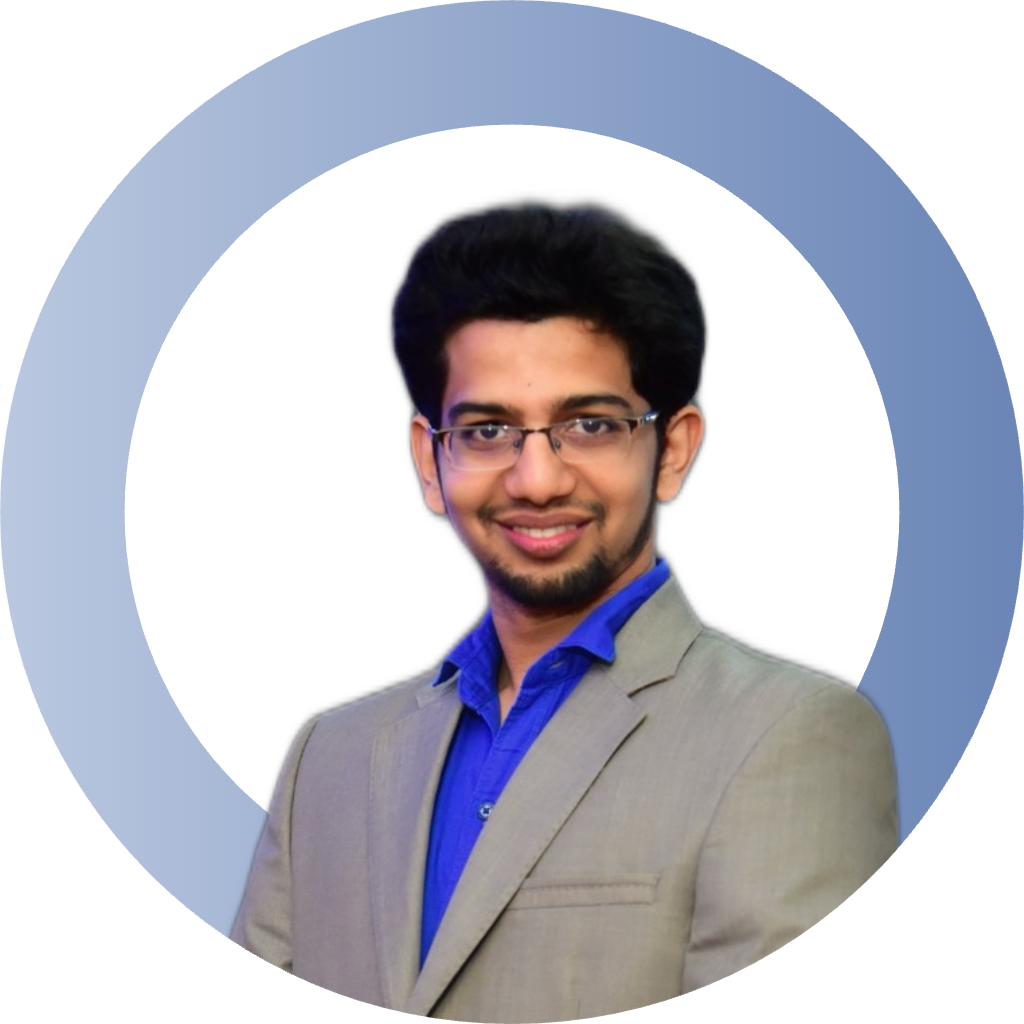
Deepak Bharadwaj

Deepak Bharadwaj

Backend & platform engineer · Product-minded
Bangalore, India · 9 Years Building Systems

I learned engineering discipline at SAP Labs, where correctness under concurrency mattered because the customers were banks and insurers.

At Elocity I took founding-engineer-style ownership of a multi-tenant EV charging platform: designing services, writing the code, running the infrastructure, and answering the page when it broke. That platform grew to 500K+ daily transactions, and I grew into setting its technical direction.

I also spent time running product for that same platform. It made me a better engineer: I now push hard on what actually needs to be built, and then build it to stay up.

Engineering Principles

  • Boring where possible: Proven components and simple designs, with novelty spent only where the problem demands it.
  • Make failure explicit: Timeouts, retries, idempotency, and fallbacks are designed, not discovered in an incident.
  • Data ownership is architecture: Clear owners for every table and topic prevent most cross-team coupling.
  • Reliability is a feature: Throughput numbers mean little if the system degrades at peak.
  • Raise the floor: Reviews, standards, and mentoring compound faster than individual heroics.

Honors & Recognition

  • SAP Catalyst Award (2020) Recognised for engineering delivery and banking-connector reliability.
  • Appreciation Letter, RubyPixels (2017) Commended for early technical contribution.
  • Best Outgoing Student Award (2012) Academic excellence and leadership.

Get in Touch

Open to Staff and Principal engineering, platform, and founding-engineer roles — Bangalore or remote.

DIRECT INQUIRY · FASTEST RESPONSE

Let's talk about the system you're building

Scaling an event-driven platform, hardening multi-tenant infrastructure, or standing up a new system from zero — my inbox is open.